
Driven
The Fat Friday meal was supposed to end the tensions over the car accident, but the following day, they come back.

Written for a prompt by Sherman Alexie, the idea of which was to describe a meal, then add a thing we are anxious about. I had a bump in my car (broke its nose, only just got it back from the body shop) so, needless to say, driving is quite fraught for me at the moment. The rest is pure fiction, I assure you.
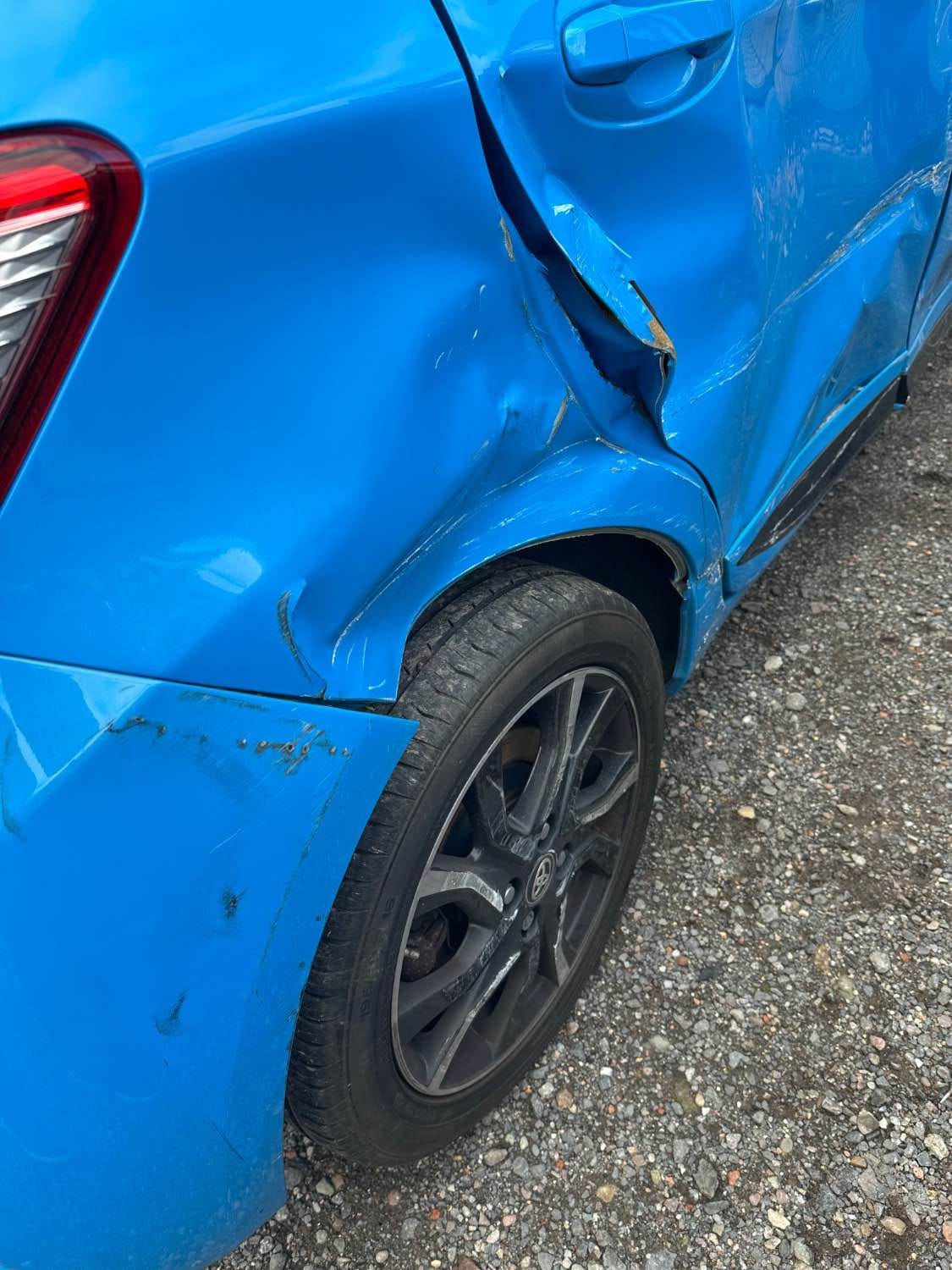
Fat Friday was a thing in Melanie Prendergast’s home. Jim had just got her little Kia back from the body shop, and though it was a little wonky on one side, it was as fixed as it could be, under the circumstances. He had just about forgiven her; the bill, all told, was nudging a grand—money they could ill afford to spend with the promise of the cruise on the horizon. They just needed to get a decent price, and had been saving for months. Nonetheless, a treat was in order, so she took out the mussels, the mushrooms, and the cream and chopped up the onions and garlic. A bottle of white wine stood nearby; a good glug of that would join the cream, the onions, and the garlic soon enough, after which the mushrooms and mussels would join in the fun. The padrons were oiled and salted before they went into the oven while Jim cut the bread and laid the table. From the corner of her eye she saw him put the corn chips out with the hummus and taramasalata. When the mussels were done, she took the pot into the lounge and put it on the mat, then served it up.
The next day dawned bright and cheerful. After pancakes with strawberries and cream washed down with tea, Melanie said, “Let’s go out, Jim.”
He stopped, mid-scrub, his forearms covered in suds and pressed his lips together. “It’s too soon, love.”
His words hit her like a gut punch. “I know how to drive, James.”
“You jumped a red light…”
“Amber.”
“And T-boned that Toyota.”
“She should have stopped.”
“Her light was green.”
“How do you know? You were…”
“Yes, we were arguing, but your eyes should have been on the road.”
“And not where you were pointing to. It’s never your fault, is it, James?”
He kept his back turned and said nothing.
He always turned his back and walked away, or kept on with what he was doing when she argued with him. There was no point in trying to get a response, he’d just turn around and walk out. Fine. Melanie snatched the keys from the hook by the door and ran out to the car. As she was turning the key in the lock, he was there, hand on hers, pulling it back. She smacked her hard-shod heel into his shin.
Crying out and cursing, he let go, then lunged at her, but she spun around and drove both fists into his midriff.
He fell, gasping, to the block-paved driveway.
She opened the door, backed the car out, and pulled out into the road, the writhing figure of her stricken husband shrinking in the distance. He was such a drama queen! It felt good to be back behind the wheel, rolling past the shops and houses where she used to take the bus. She had enough fuel to go to Hawesley. Jim would no doubt expect a peace offering to make up for hitting him but he had asked for it, grabbing her like that. I’m not a child!
Anger clung to her like a wet t-shirt, hugging her chest and tensing her arms. She breached the speed limit a few times, taking the corners of the high country roads a bit too fast. A Jeep driver blared his horn as she swung round a bend, missing him by inches. A red-ringed 30 slowed her down, and the road dove down into a stone-built village with narrow roads and a great old inn. She parked in the capacious driveway and walked in.
Light streaming in through the small plus-sign windows glinted off the polished pewter and copper tankards that hung on hooks screwed into the rough oak beams. A gaggle of tourists in brightly-coloured t-shirts had gathered around a table by the cold unlit fireplace and were chattering away over bottled ale. Locals were sitting together in knots, glancing at the tourists from time to time and speaking sotto voce.
Melanie ordered a glass of wine and sat sipping it in a corner. The quiet calmed her, and she felt like the Incredible Hulk turning back to normal. When she lifted her glass she noticed the blood smeared on the upper side of her hand. A cold chill gripped her. Jim fell, gasping, and she’d left him writhing where he lay, calling him a drama queen. She hadn’t stopped to check if he was okay. He might be seriously injured—or dead. She looked at her glass, noticing the difference between the purplish colour of the wine and the browning smear on her hand. Trembling, she took a sip. It tasted like pee. She could call him, she supposed, to find out how he was.
He was furious about the bump at the time. But it was only a bump; the car was drivable afterwards. And it was a moving advertisement of her driving skills—and, by extension, his… what, exactly? Was he ashamed to be seen with such an incompetent idiot? Was that it? Now she was getting angry again. He shouldn’t have grabbed her. It was her car.
It was his first, then he bought the Volkswagen. Maybe he still felt that he owned it.
She looked at her hand again. Shame crawled up her spine, squeezing and churning her stomach, heating her face.
They were trying to find a place to park. Jim said, “It’s over there, second exit. Right there.” But she couldn’t see what he was pointing at. They had reached the lights, which turned amber. She had a second or two, so she put her foot down. Crunch! The blue Toyota swung to the kerb and mounted the corner of the pavement. “Pull over!” Jim barked. She parked up on the double yellow lines and got out, trembling. Her feet felt like lead. Each step took effort. Fighting the urge to leg it, she walked over to the stricken car.
The driver was talking to a couple with a pram, asking if they saw anything. “That black car has gone, they just drove away.”
“I’m here,” Melanie said. She took her phone out. “You’ll want my insurance details.”
They swapped contact and insurance details, then parted ways.
Jim wouldn’t let her drive home. He took over, arranging the repairs and sorting things out with the other driver. For a week, they’d barely spoken and she’d spent the time moving around like a paranoid mouse, trying not to make any noise.
Fat Friday was supposed to put a lid on it. To get things back to normal. Fat chance! Tears prickled her eyes. What would she be going back to?
The memory of the bump prodded her. She had hit the right wing of the other car, denting it. The headlights were intact. She hadn’t hit it hard enough to do structural damage but Jim had kittens about it and treated her like the world’s biggest fool.
But was she any better? She had violently assaulted her own husband and left him for dead.
Don’t be so dramatic!
Her phone hadn’t rung. He was probably nursing his wounded pride and wouldn’t speak to her for a month. Then he’d get over it—and think twice before trying to stop her from driving again.
But there’s blood.
There’s no sirens.
They don’t know where you are.
They can trace you by your phone.
Sooner or later, she would have to go back and face up to what she had done.
The other driver was shaking with anger, glaring at her. She had insisted on calling the number Melanie gave her to make sure it was the right one. Apologising over and over helped a bit, but as the other driver pointed out, the car still had a dented wing.
And the Kia’s nose was broken. The registration plate had a chunk missing. It was her fault, really. She saw the Kia coming and drove on, nonetheless.
Well, she’d paid for the wine. She’d have… no. The blood on her hand said no. The memory of the collision said no. The cloying guilt and clinging shame said no. Melanie got up and walked out, leaving her drink behind.
Across the road, a bus pulled up and loitered; she could see the driver reading a newspaper. She could drop her phone in the bin, get on that bus, and disappear if she wanted to.
Her feet felt like lead. Every footstep took effort, as though she was walking through tar, but she went back to the car, got in, and drove home. She went into the house, into the kitchen.
Jim was sitting at the table. He looked up at her, his lips a thin pink line.
“Are you okay?” she asked.
“I’m trying to decide what to do.”
“I’m sorry.”
He huffed.
“I can’t live like this.”
“Neither can I, Jim. We can’t talk things through because you think you know better than me—and sometimes you do—but I’m not a child and I don’t like being treated like one.”
“Is that why you stabbed me?”
Melanie paused. At this point she would usually equivocate or try to shift the blame. Then he’d turn his back and give her the silent treatment and the wheel would turn again. Something had to change. “Yes. You were trying to stop me from driving the car you gave me and told me was mine. You grabbed me, trying to take my keys and I fought back. It wasn’t even about the driving, Jim.”
Something in his expression changed, as if he understood.
“It was about me making choices for myself. Being a grown up.”
“Going for a glass of wine.”
“I didn’t drink it. I felt bad about hurting you and knew I would have to face up to it.”
He nodded. “I suppose you thought you were defending yourself.”
“I actually was. My self—what makes me who I am. I’m a person in my own right, Jim. An adult.”
He laughed, nodding.
“What?”
“You did a great job. I needed five stitches.”
“I’m sorry about that. Shall I put the kettle on?”
He sighed. “Go on, then.”